
Confused by how non-rebreathing circuits manage CO2 without an absorber? Using the wrong flow rate can lead to serious complications for small patients. Understanding its high-flow principle is key.
A veterinary non-rebreathing circuit works by using a high flow of fresh gas (oxygen and anesthetic) to flush the patient's exhaled carbon dioxide out of the system. This simple design eliminates the need for a CO2 absorber and one-way valves, offering low breathing resistance for small animals.
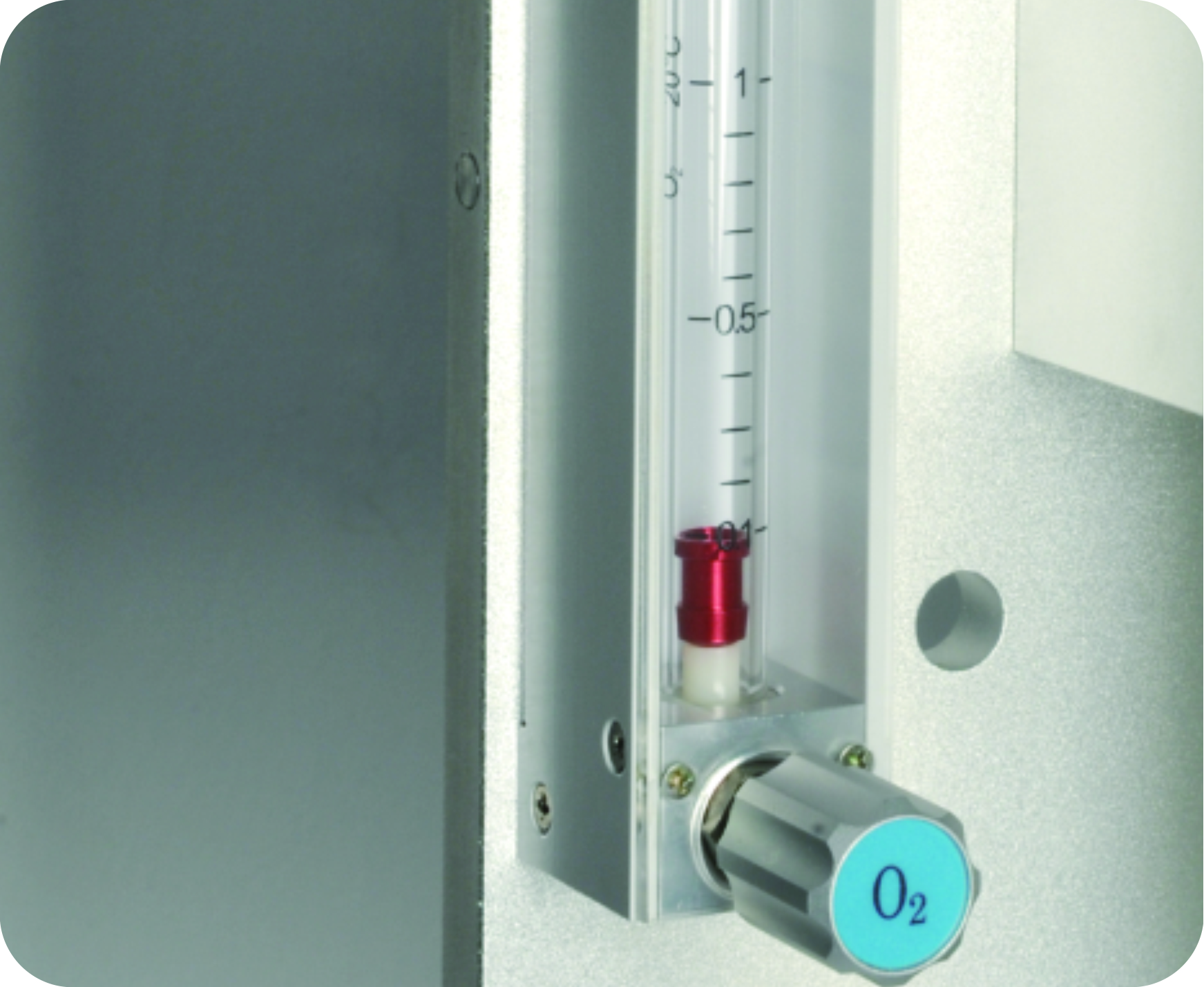
It seems simple, right? A continuous flow of gas pushes everything out. But this simplicity is where the details really matter. Over my years of manufacturing and talking with vets, I've learned that mastering the non-rebreathing circuit isn't just about turning on the gas. It's about understanding the delicate balance between flow, patient size, and safety.
Why Is High Fresh Gas Flow So Crucial in a Non-Rebreathing System?
Worried about your small patient rebreathing dangerous CO2 during surgery? An incorrect gas flow rate fails to clear exhaled gases, leading to hypercapnia. A sufficiently high fresh gas flow is the only mechanism preventing this.
High fresh gas flow is essential because it's the sole mechanism for removing exhaled carbon dioxide. Unlike rebreathing systems, there's no absorber. The continuous, high-volume flow physically pushes waste gases out through the scavenge port.
The Role of Flow Rate
The FGF must be high enough to completely replace the volume within the breathing tube before the patient takes their next breath. This is based on the physics of Mapleson systems, where the washout efficiency depends on the ratio of FGF to the patient's respiratory demands.
Calculating the Right Flow
The generally accepted formula for FGF in non-rebreathing systems is based on the patient's minute volume (MV).
$$MV = V_T times RR$$
(Where $V_T$ is tidal volume and $RR$ is respiratory rate). A common clinical standard, supported by many University Veterinary Teaching Hospitals, is to set the FGF at 1.5 to 3 times the patient's MV to prevent rebreathing.
| Patient Weight | Typical Minute Volume (MV) | Recommended FGF (1.5-3x MV) |
|---|---|---|
| < 2 kg | 0.2 - 0.4 L/min | 0.3 - 1.2 L/min |
| 2 - 5 kg | 0.4 - 1.0 L/min | 0.6 - 3.0 L/min |
| 5 - 7 kg | 1.0 - 1.4 L/min | 1.5 - 4.2 L/min |
What Are the Real Advantages of Such a Simple Design?
The main advantage is its extremely low work of breathing (WOB). Small patients under 7kg, who have limited respiratory muscle strength, can breathe easily without overcoming the inertia of heavy valves.
Why Low Resistance Matters
Standard circle systems require a certain opening pressure for the unidirectional valves. For a 2kg kitten, this resistance can lead to hypoventilation. The non-rebreathing circuit (like the Bain or Ayre's T-piece) removes these mechanical barriers.
Rapid Anesthetic Control
Because these circuits have a very low internal volume, they have a short Time Constant.
$$text{Time Constant} = frac{text{Circuit Volume}}{text{Fresh Gas Flow}}$$
This means any change in the vaporizer setting reaches the patient almost instantly, allowing for precise, real-time control over anesthetic depth.
What Are the Hidden Dangers?
The primary dangers are patient hypothermia and increased cost. The high flow of cold, dry gas rapidly strips heat and moisture from the patient's airway.
| System Type | Gas Flow for 5kg Patient | Anesthetic Use | Heat Conservation |
|---|---|---|---|
| Non-Rebreathing | ~2.0 L/min | High | Poor |
| Rebreathing (Circle) | ~0.5 L/min | Low | Good |
When Should You Choose a Non-Rebreathing Circuit?
The industry standard, recommended by the ACVAA, is to use a non-rebreathing circuit for patients weighing less than 7 kg (~15 lbs).
- Patients Under 7 kg: The priority is minimizing breathing resistance.
- Patients Over 7 kg: A rebreathing system is preferred to conserve heat, moisture, and expensive anesthetic agents.
Conclusion
In short, the non-rebreathing circuit uses high gas flow to ensure small patient safety. Understanding its principles, from washout ratios to time constants, is crucial for safe veterinary anesthesia.